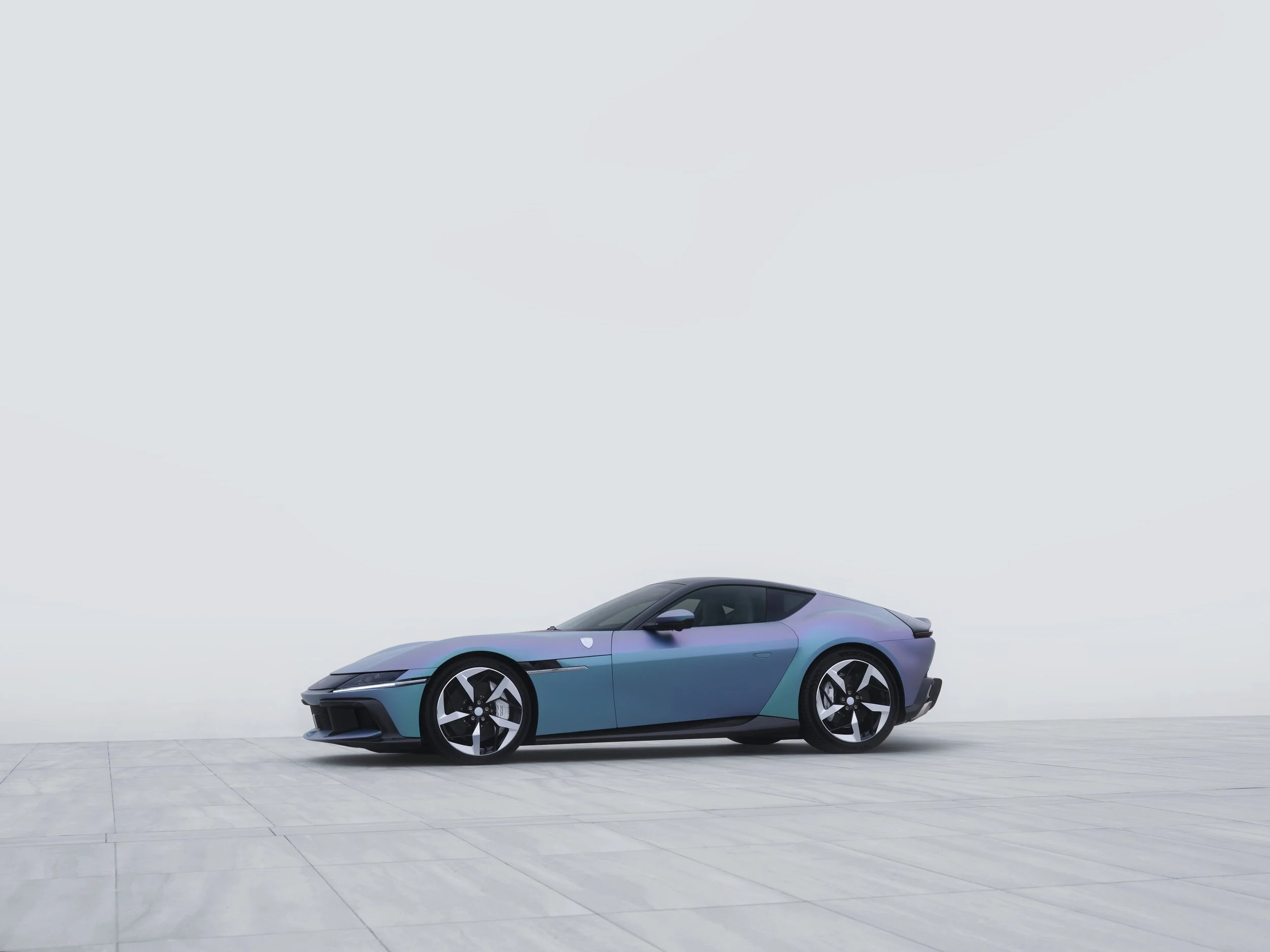
Ferrari 12Cilindri Tailor Made

전통에서 영감을,
혁신으로 나아가다
페라리는 쿨 헌팅(COOL HUNTING)과의 협업 아래, 동시대 한국 작가들과 함께 한국을 기리는 단 하나의 12칠린드리 테일러메이드를 완성했다
Inspired by Tradition,
Driven by Innovation
Ferrari and COOL HUNTING collaborate with contemporary Korean artists, creating a one-of-a-kind 12Cilindri Tailor Made honoring Korea
김현희
Hyunhee Kim



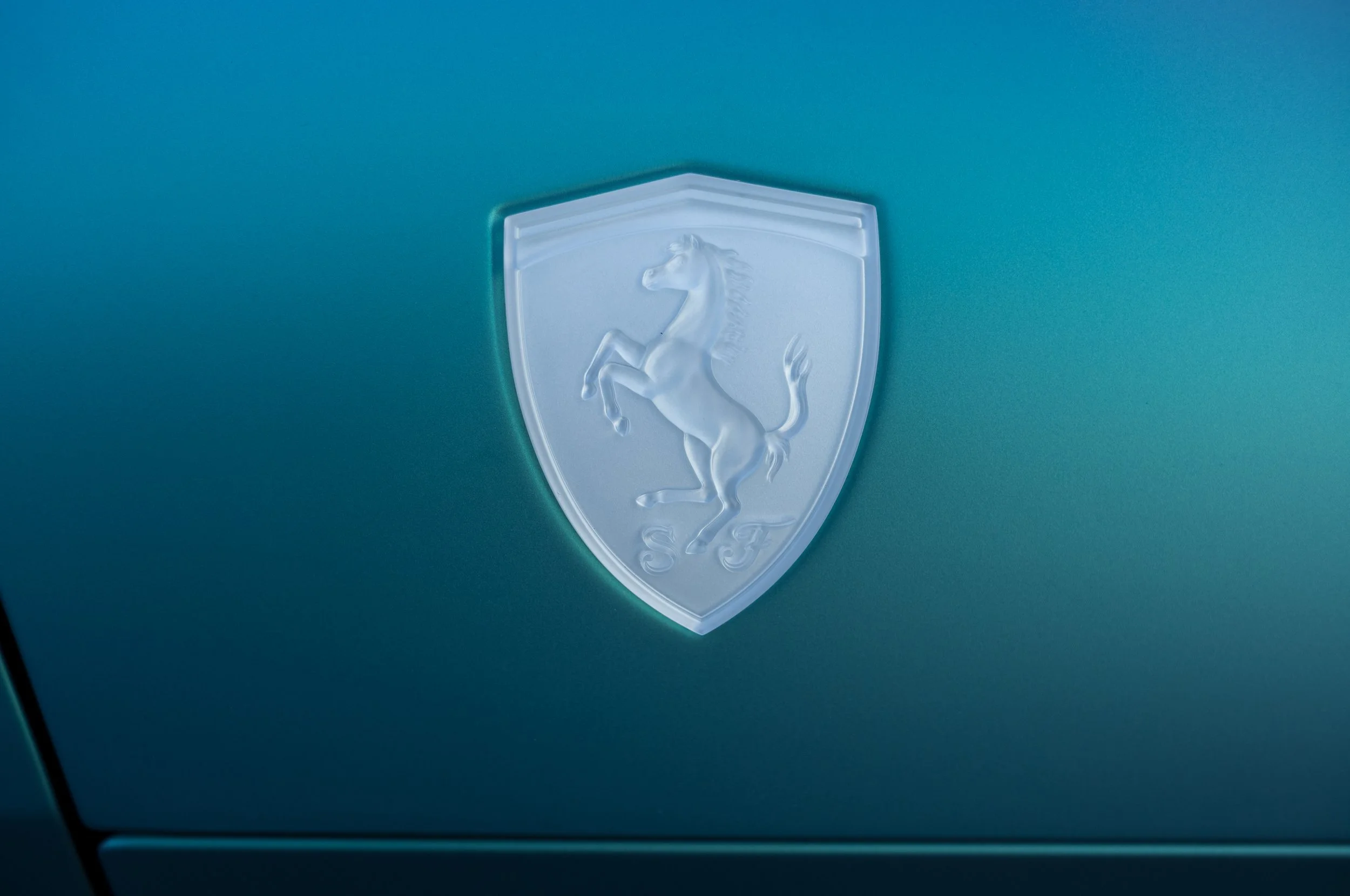


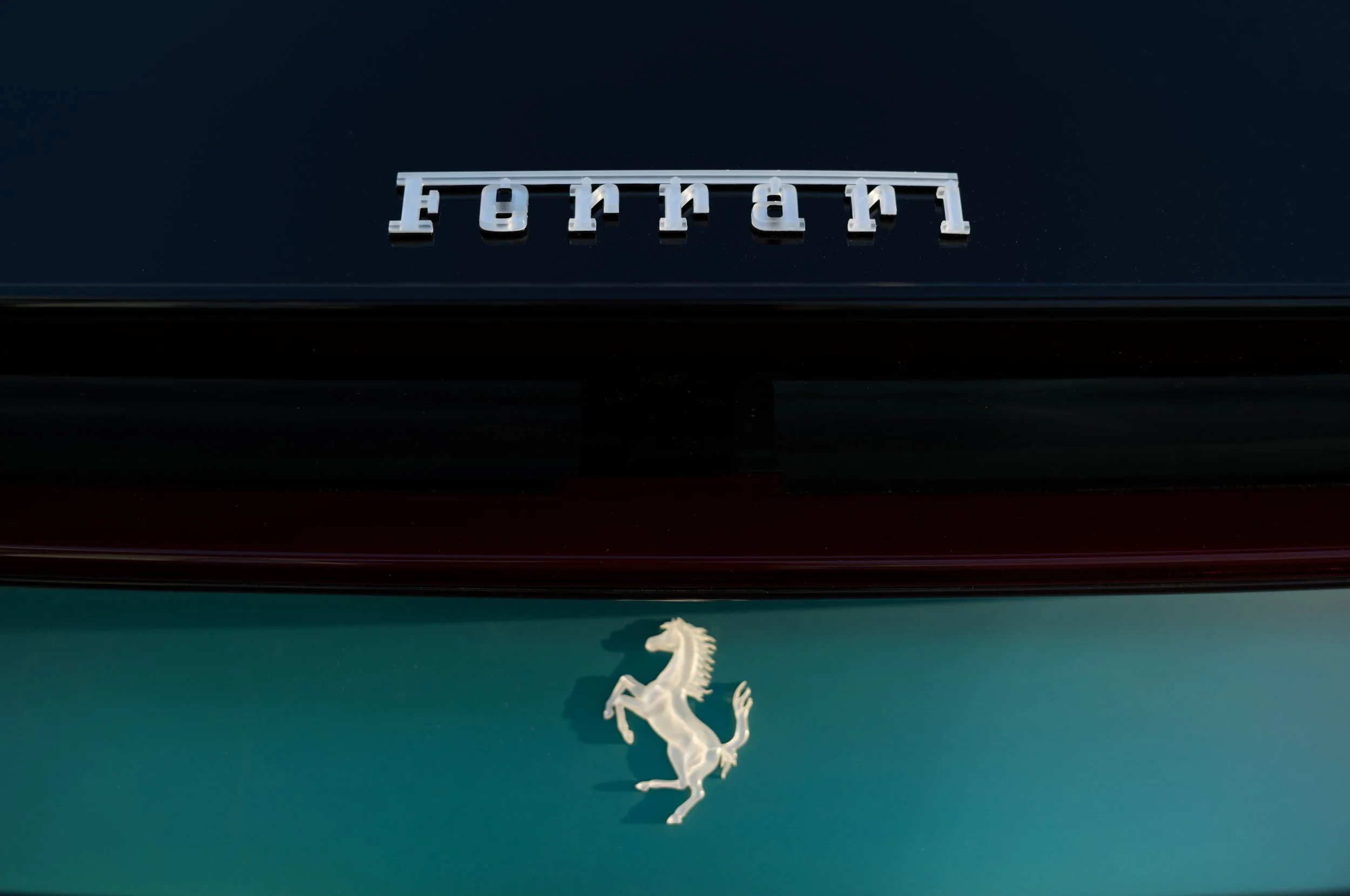


12칠린드리 내부와 외부 배지, 상징을 새롭게 정의한 반투명한 백색의 층위
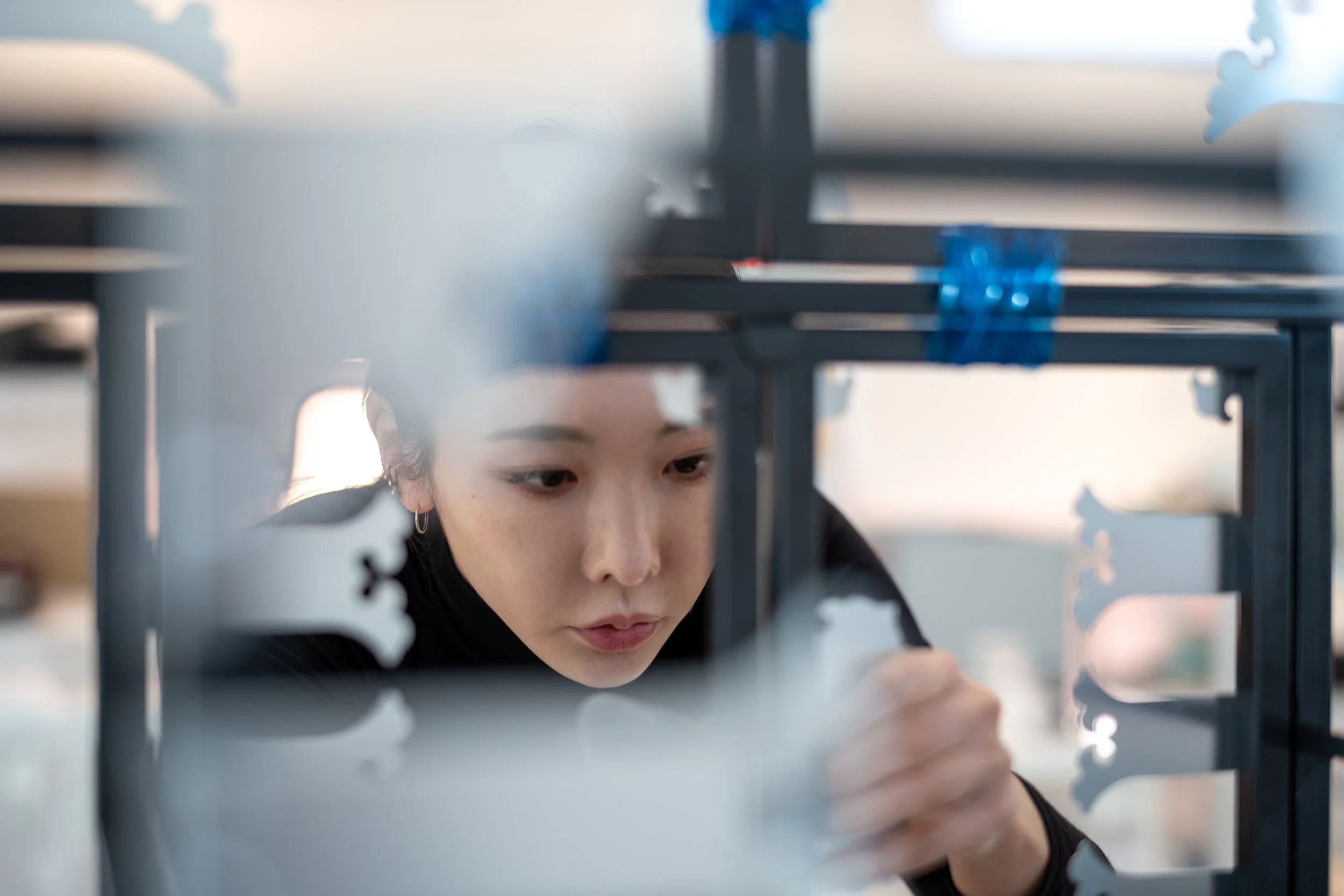
김현희 작가는 기억과 정체성, 동시대의 담론을 출발점으로, 한국 전통 가구의 형식과 제작 방식을 변형-해체-재정의하는 작가이다. 대표 연작 화이트 노스탤지어는 근대 사회의 스펙터클 속에서 흔들리는 뿌리와, 그 안에 공존하는 그리움과 자율성의 감각을 포착하며 국제적인 주목을 받아왔다.
그녀의 작업은 단순한 향수의 재현을 넘어 현대적 담론으로 확장된다. 한국의 전통 가구 제작은 오랫동안 남성 중심의 영역이었고, 여성성은 침묵이나 연약함으로 환원되곤 했다. 특히 에이션트 퓨처 연작에서는 물리적, 사회적 활동이 제한적이었던 당시 여성상을 대변하는 규방 가구의 벽을 해체하여, 안과 밖의 경계를 지우고 주체적으로 재정의함으로써 동시대적 자율성을 보여준다.
이러한 태도는 화이트 노스탤지어 연작에서 흰색에 대한 서사적 해석으로 이어진다. ‘백의민족’이라는 사상 아래 한국에서 순수와 절제를 상징해 온 흰색은, 그녀의 작업에서 단일한 의미를 벗어난다. 서로 다른 기억과 정체성이 축적될 때 나타나는 결과로써의 흰색, 즉 다양한 빛의 파장이 겹칠 때 형성되는 상태로서의 흰색이 되는 것이다. 이는 한 가지 정의로 환원되지 않는 한국의 정체성과도 맞닿아 있다.
김현희는 전통 가구의 틀을 차용하되, 투명한 현대 소재 위에 장식을 남긴다. 반투명한 백색의 벽은 현재 속에서 과거를 바라보는 모습을 표현하며, 전통 가구를 향수와 자율성이 공존하는 공간으로 변환시킨다.
이러한 반투명한 백색의 미학은 12칠린드리 테일러메이드 코리아의 내외부 주요 요소 전반에 적용되었다. 빛에 따라 은은하게 변화하는 표면은 현대 한국이 지닌 복합적 정체성을 상징하며, 이는 페라리 역사상 처음으로 카발리노와 롱 L 뱃지를 반투명한 흰색으로 구현하는 계기가 되었다.
또한 김현희는 문자도의 형식을 빌려 좌석 뒤편에 위치한 헌정 플레이트를 제작했다. 구름 문양으로 형상화된 ‘12’는 830마력을 생성하는 V12 엔진의 열두 개 실린더를 가로지르는 바람을 상징하고, 여기에 한국의 가장 대표되는 민족정신인 ’한‘을 결합하였다.
트렁크에는 그녀의 작품 <함>이 함께 제공된다. 이는 차주가 해당 차량과 앞으로 쌓일 기억과 시간을 담을 공간이자, 김현희의 조형 언어로 재해석된 키 형태의 오브제를 포함해 김현희의 작업 세계가 페라리와 결속되는 마지막 장치로 기능한다.
Translucent, ethereal treatments ground the interior design and elevate the exterior badging and branding of the 12Cilindri
Hyunhee Kim presents contemporary discourse on the notion of memory and identity through the transformation, dismantling and redefinition of traditional Korean furniture. Through her internationally renowned series, White Nostalgia, Hyunhee seeks to capture the essence of sentimentality embodying longing and remembrance of one’s roots alongside the spectacles of modern society.
Hyunhee’s artistic vision transcends sentimentality, delving into modern discourse. In her Ancient Future series, she reflects on how femininity was often associated with weakness or silence. This was exemplified by Gyubang furniture (female room furniture), in which the pieces were designed to captivate women indoors, limiting their physical and social boundaries. By tearing down the walls she blurs the boundary between the exterior and the interior to express the autonomous aspects of modern society.
This dialogue continues in her White Nostalgia series, where she signals a shift in the meaning of the color white in Korean society. Traditionally, Koreans were described as “Baegui Minjok,” the “people of white clothing.” White Hanbok, a traditional Korean costume, was historically the most popular. A strong Confucian belief emphasized a stoic lifestyle, leading people to uphold the value of purity portrayed in white. Now, through Hyunhee’s work, the color is interpreted as the amalgamation of different identities one may hold, much like light turns white as various shades accumulate, much like how Korea defines its identity with the assembly of various aspects.
In bold defiance of this historical context, Kim dismantles existing walls and barriers of traditional furniture while leaving delicate decorations layered onto transparent materials, allowing people to look back on the past. By doing so, her works subtly reveal the power of memories one holds within, transforming traditional Korean furniture into works that embrace both nostalgia and autonomy.
Hyunhee applies her half-transparent, ethereal white aesthetic vision to the car in both its interior and exterior design, reflecting Korea’s modern spirit, shimmering in light while embracing the complex identity the country has built in recent years. It also inspired Ferrari to design the Cavallino and Long F badging in translucent white for the first time in its history, along with the white emblems on the wheels.
Hyunhee created a dedication plate featuring a logo she designed that is mounted behind the seats. Its style was drawn from Munjado, a traditional calligraphic art form that integrates images related to the characters' meanings. Honoring the significance of the V12 engine, she borrowed shapes of clouds to write “12”, making an analogy to the wind that travels through 12 cylinders to generate the engine’s 830 hp. It is paired with “Han,” the first letter of “Hanguk,” signifying the spirit of Koreans.
An original artwork is delivered in the trunk. <HAM>, a traditional cask for valuable and meaningful items, is included for the collector to store memories of his experiences with this car. This piece also holds an object in the form of a Ferrari key customized to her visual language, so that the owner can fully experience her varied and original practices in connection with Ferrari.
아티스트들을 만나보세요
Meet the Artists